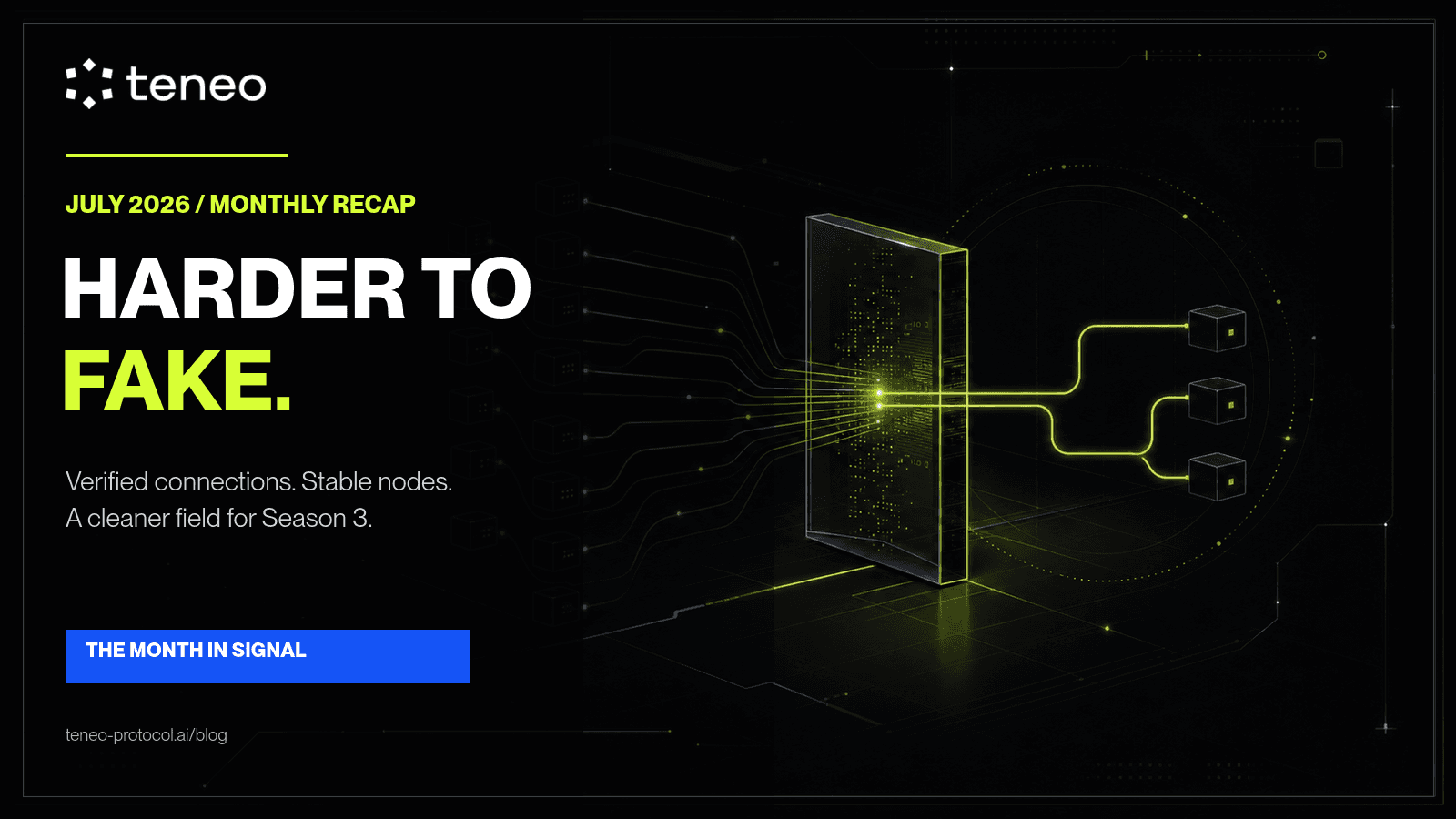
July was not a month of big announcements. It was a month of making the network provable. Season 2 closed, Season 3 opened on a cleaner field, the Beacon got a stability pass, and we published more about what the agents on this network actually do.
July was not a month of big announcements. It was a month of making the network provable.
Season 2 closed, Season 3 opened on a cleaner field, the Beacon got a stability pass, and we published more about what the agents on this network actually do. If you run a Beacon, most of what changed in July changed in your favour, and some of it is only obvious in hindsight.
Here is the month.
Season 2 closed with 706 winners
Season 2 settled on 1 July. 706 winners, all verified accounts, each with a winner card.
The mechanic worth understanding is the payout wallet. Every winner confirms their wallet on the card at the moment they win, not months earlier in a form they have since forgotten. That is why payouts land where they should. Once confirmed, the payout is queued and arrives within 72 hours.
Season 2 also ran on the broadest-reach split the community voted for. More winners, wider spread, all the way down to the $2 floor.
Season 3 shipped real-connection verification
This is the change that matters most, and it is the least glamorous thing we did all month.
The network now sends small verification tasks to each node to confirm it is a genuine connection. That blocks fake IPs and bots, including the fake residential IPs people were using to inflate their scores.
Two results. The network runs more stably. And the leaderboard reflects real nodes doing real work instead of accounts gaming the system.
Season 3 also runs for 60 days, longer than prior seasons. More time on a cleaner field means genuine participants compete on level ground, with better odds than when exploiters were padding the board.
The Beacon itself
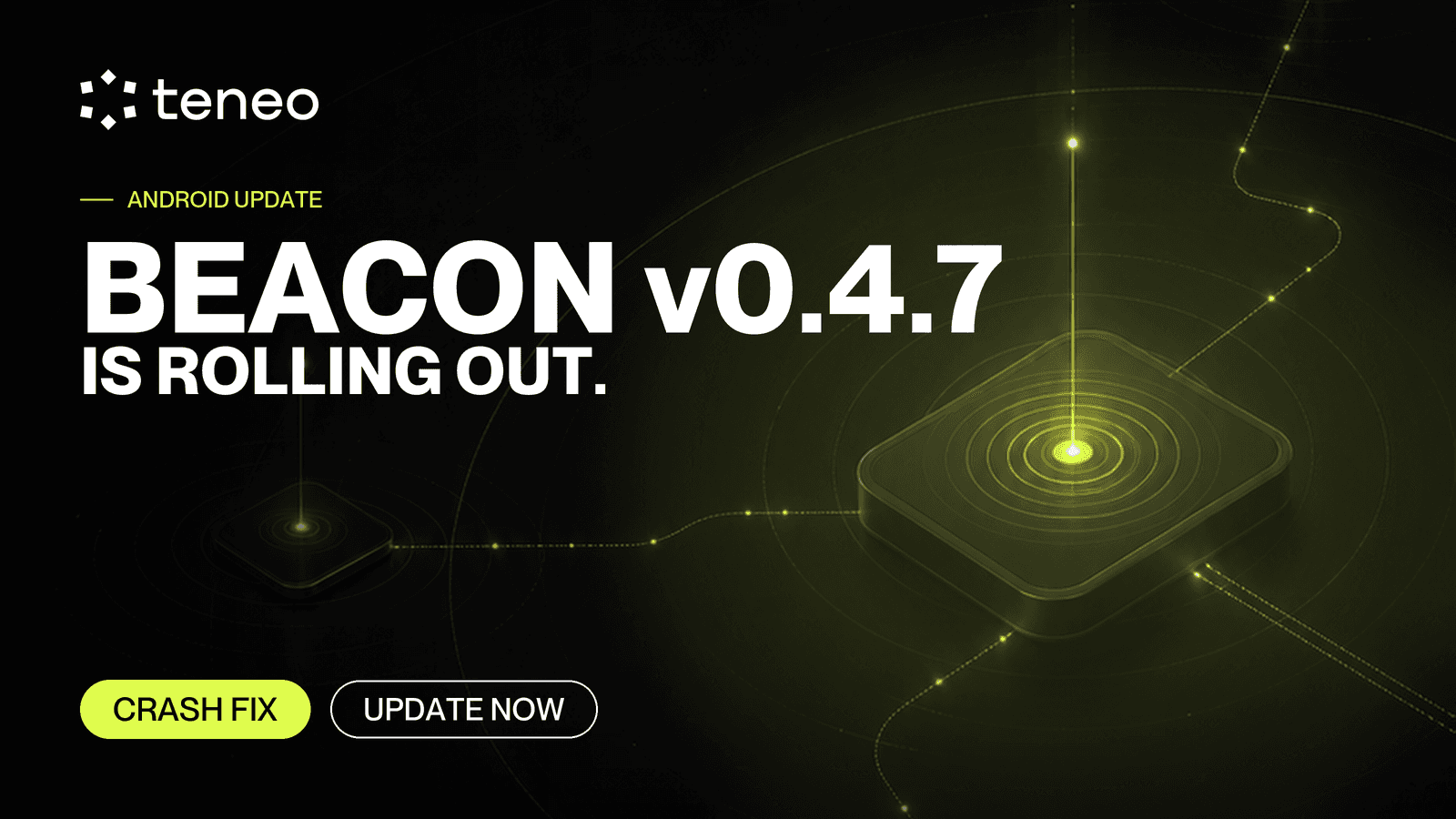
v0.4.7 (Android) rolled out on 21 July, a crash-prevention pass. The conditions that were killing the app mid-session on some Android devices are patched. If your node had been dropping unexpectedly, that was the fix.
The standing rule has not changed: run the latest version on whatever platform you use. Desktop, Android, iOS. Stability and uptime tracking both depend on it.
A VPN question we started asking out loud. Late in the month we published an R&D piece on whether the bandwidth your Beacon already contributes could pay for your VPN. To be clear about what that is: research and early testing, not a shipped feature, not a roadmap commitment. We would rather show you the thinking while it is still thinking.
What if your Beacon bandwidth paid for your VPN?
What we published
Five pieces went out in July, and they split cleanly into two audiences.
If you run a Beacon:
- How to run Teneo Beacon effectively is the operator guide. Uptime is what the network pays for. Everything else multiplies it. Boost windows, multiple devices on different networks, overnight running. If you have installed Beacon and never touched it since, this is the post that changes your numbers.
- The Teneo Creator Challenge opened on 8 July. Short video about running your Beacon, posted to TikTok or Instagram, tagged #KeepYourBeaconRunning. $200 USDC across 13 winners. No production budget required.
If you build with agents:
- The DexScreener agent turns any token screen into a filter you can query.
- I let an AI agent prep my meetings for cents a head is a working workflow, not a concept. Calendar in, participant research out, paid per query.
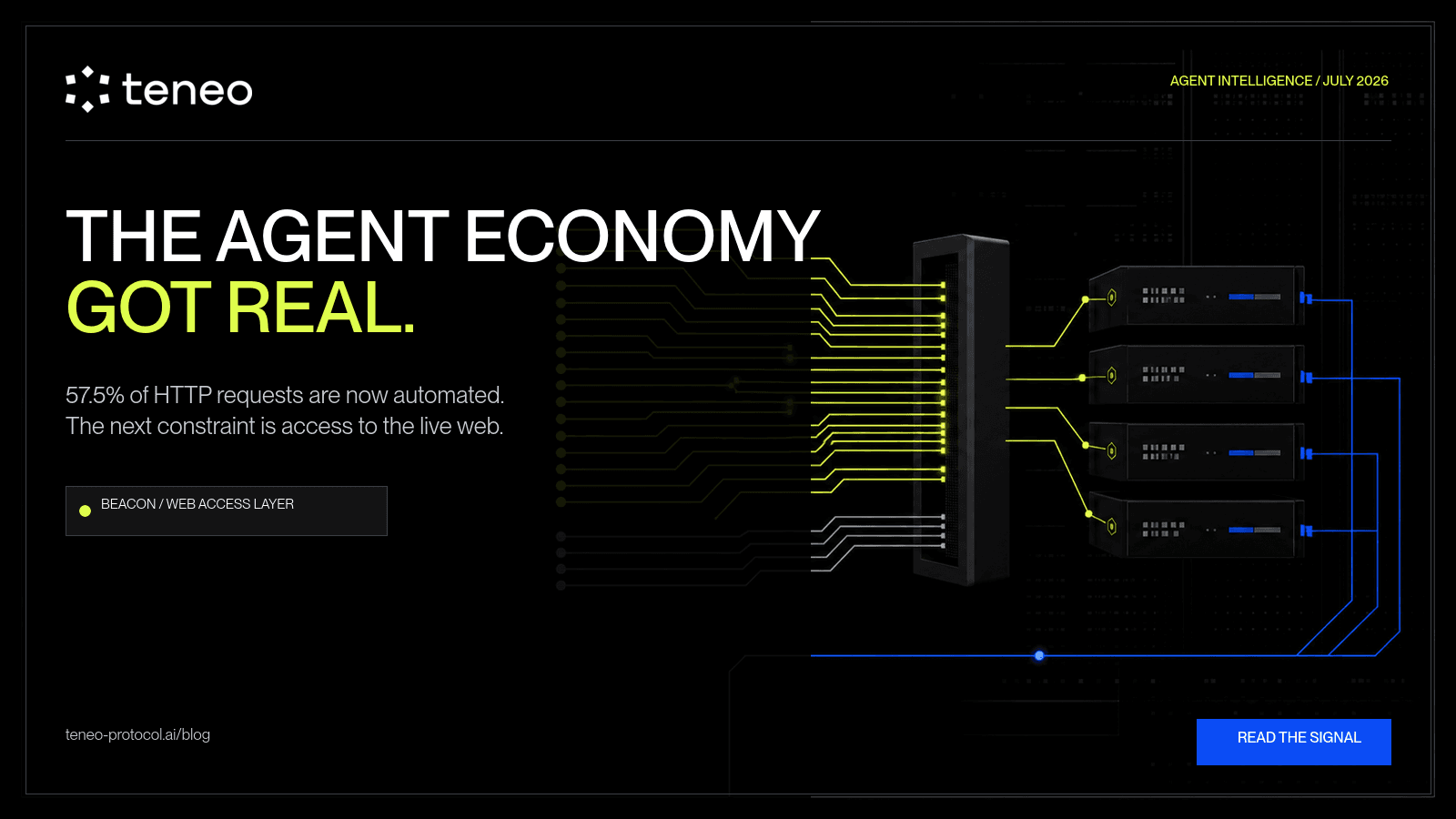
- The week the agent economy got real closed the month by arguing that the shift stopped being a forecast in July.
That last one is the through-line. The agent economy did not arrive as a launch. It arrived as a series of unrelated companies independently deciding that agents need to pay for things.
Where Teneo showed up
CMC Labs. CoinMarketCap has now featured Teneo three times this year through the Labs programme. The join announcement, then the Beacon, then our 2026 roadmap. Each one covered a step already shipped rather than a plan.
OpenX Network AMA. On 28 July our Head of Marketing joined Ashton Hettiarachchi of OpenX Network in an X Space on decentralized AI and DePIN from the operator side. What it takes to run a network with hundreds of agents live in production, community nodes supplying the data, and every query settled in USDC over x402.
Indonesia
On 28 July we reserved $1,000 USDC from the season reward pool for Beacon runners on Indonesian IPs, weighted by uptime. Eligibility is tied to genuine connections in Indonesia, which is only enforceable because of the verification work Season 3 shipped.
It is a deliberate test. Concentrate a pool in one region, measure what real uptime looks like there, then decide whether to do it again elsewhere.
Into August
Season 3 has most of its 60 days left to run, which means the field stays open. The Beacon keeps getting stability work. And we have more agent workflow pieces coming, because the most useful thing we can show you is not what the network could do but what somebody already did with it this week.
If your Beacon is not running, that is the one thing worth fixing today.
Key takeaways
- -monthly recap
- -Season 3
- -Teneo Beacon
- -real-connection verification
- -CMC Labs