Schwab connects clients' own AI to their accounts, Microsoft gives autonomous agents their own identity and manager, and Mastercard shows merchants what an agent was authorised to buy. On Teneo, an agent has its own key and NFT identity, and the user's wallet signs.
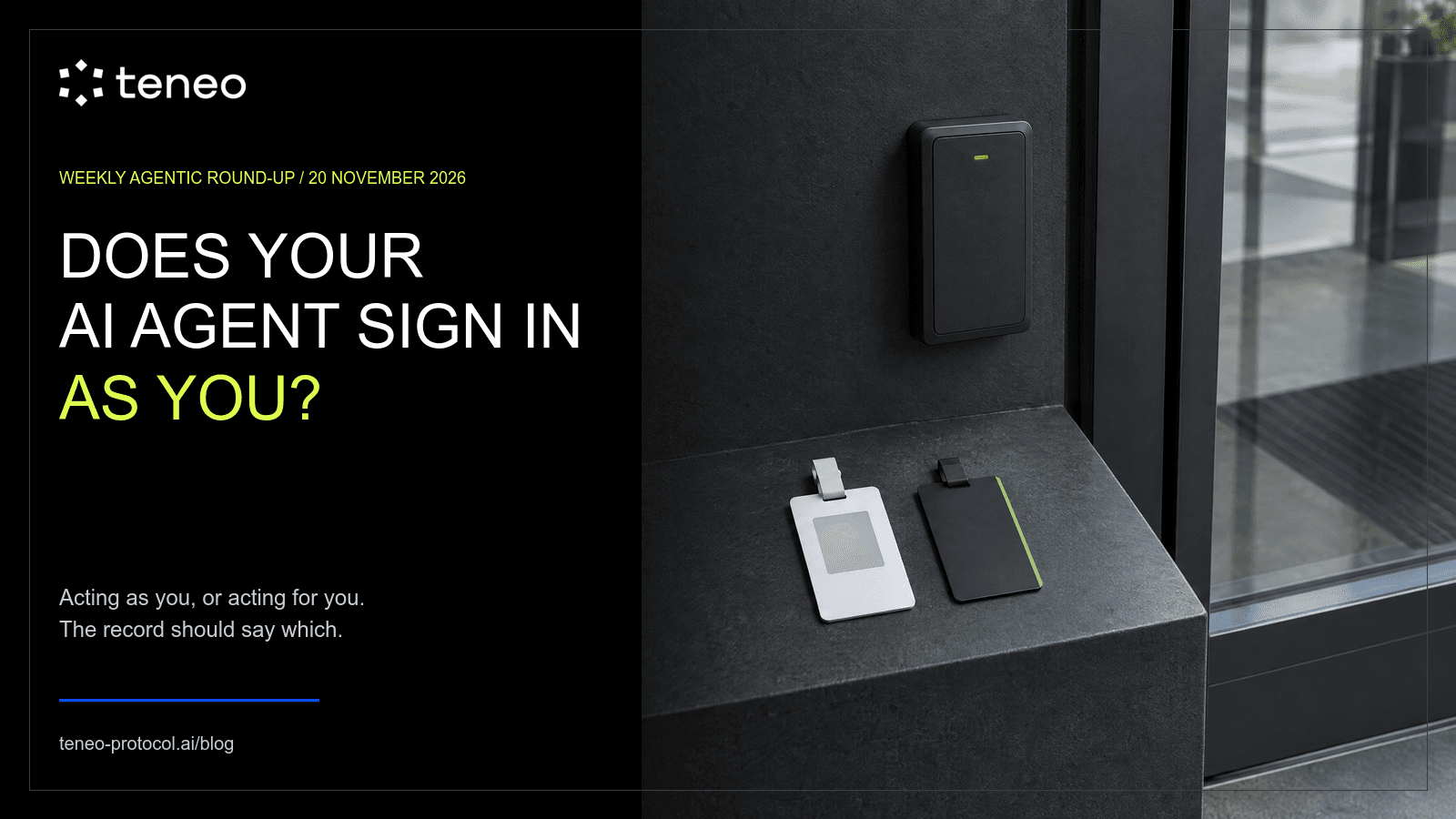
When your AI agent places a trade, sends an email or pays for something, whose name is on the record? For most agents today the answer is yours. The agent signs in with your session or your API key, and every log it touches says you did it. This week three large companies took different positions on that question.
Our previous roundup asked whether an agent can grant itself the approval meant to stop it. This week the question moves one step earlier: before anyone approves anything, who is the system actually talking to?
The developments below cover 12 to 20 November 2026.
Schwab lets clients connect their own AI to their accounts
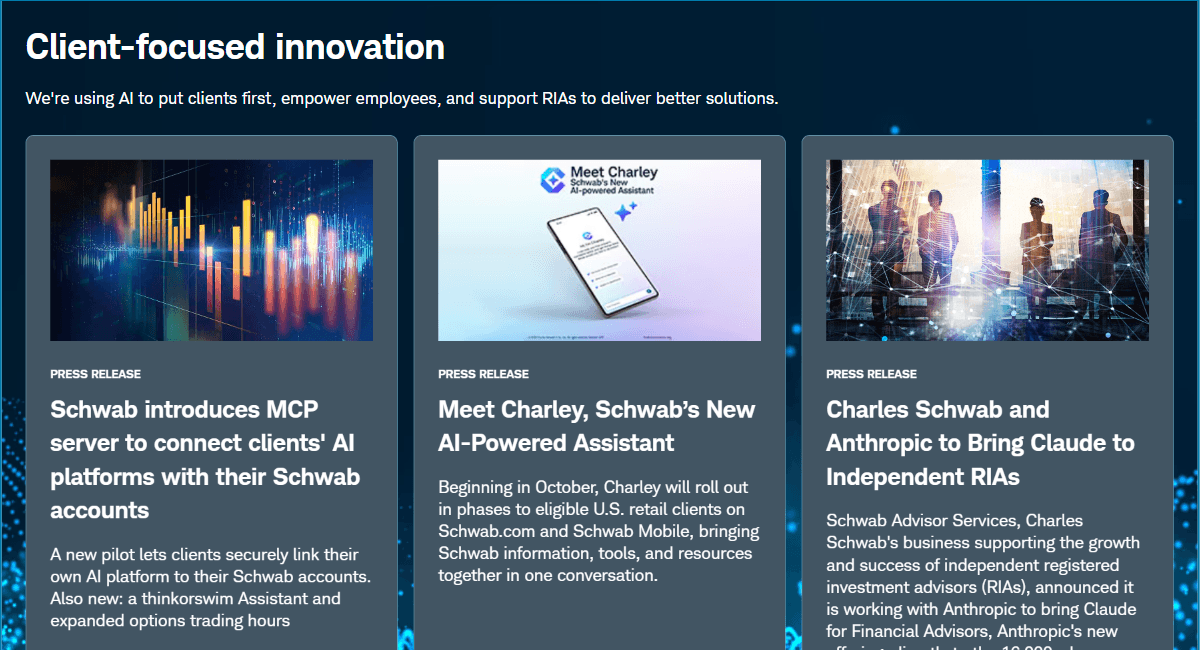
On 12 November, Charles Schwab announced its own Model Context Protocol (MCP) server. A client authorises their own AI assistant to connect to their Schwab account. The assistant can then read market data and research, analyse positions, summarise the portfolio and set alerts. If the account is enabled for thinkorswim, it can also prepare, place and manage trades, with the client in the loop.
The qualifications: this is a pilot for a select group of clients using Anthropic's Claude. Schwab says it will widen access and add other AI platforms over the coming months. The release does not say how the in-the-loop step works, for example whether every order needs a fresh confirmation.
The point for a builder: this is the delegated model. The agent works inside your account, under your authorisation, and the broker sees a client action. That can be the right design for a personal assistant. It also means your audit trail cannot separate what you did from what your assistant did, unless the platform records that difference for you.
Microsoft gives autonomous agents their own identity
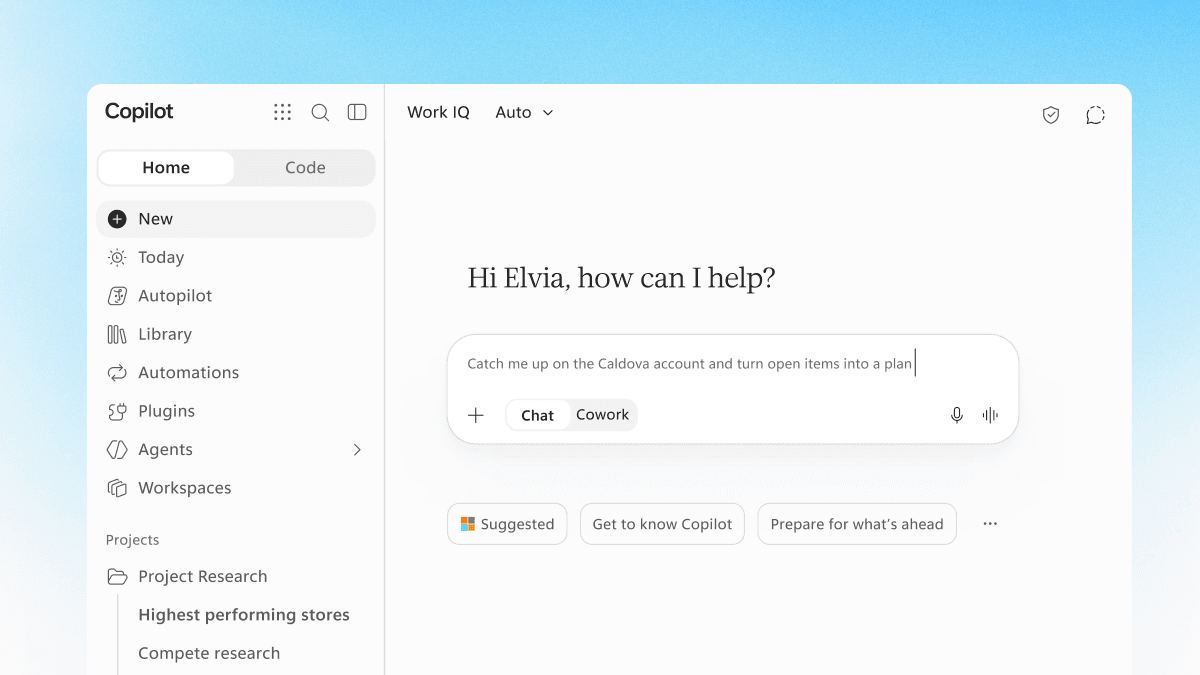
At Ignite on 17 November, Microsoft introduced Autopilot, a long-running agent that watches Teams channels, follows up on email and runs recurring work without waiting for a prompt. Each Autopilot has its own Microsoft Entra Agent ID and a named manager. IT can scope its access and block it, and its sign-ins and actions are logged under its own name.
Two days later, Microsoft's Foundry team explained the reasoning. Without an account of its own, an agent can only work in Outlook or Teams with a person's permissions. That breaks when no one is signed in, and in a group chat, where whoever the agent picks has their access applied to the whole thread. The post's author describes the assistant they built for themselves as acting "for me, not as me": it sends email under its own identity, with its own audit trail.
The qualifications: Autopilot is starting to roll out to Frontier early-access customers, so this is Microsoft's description of its own product, not an independent test. The Foundry post is also candid about the limits. Microsoft says it gave the agent a user identity to govern it like an employee, not because it is one, and that a thousand copies of one agent share the same blind spots. That is why it adds a switch that disables a whole class of agents at once.
The point for a builder: an agent with its own identity can be given narrower access than its owner, switched off without locking out a person, and blamed accurately in the logs. A borrowed login offers none of that.
Mastercard shows merchants who an agent represents
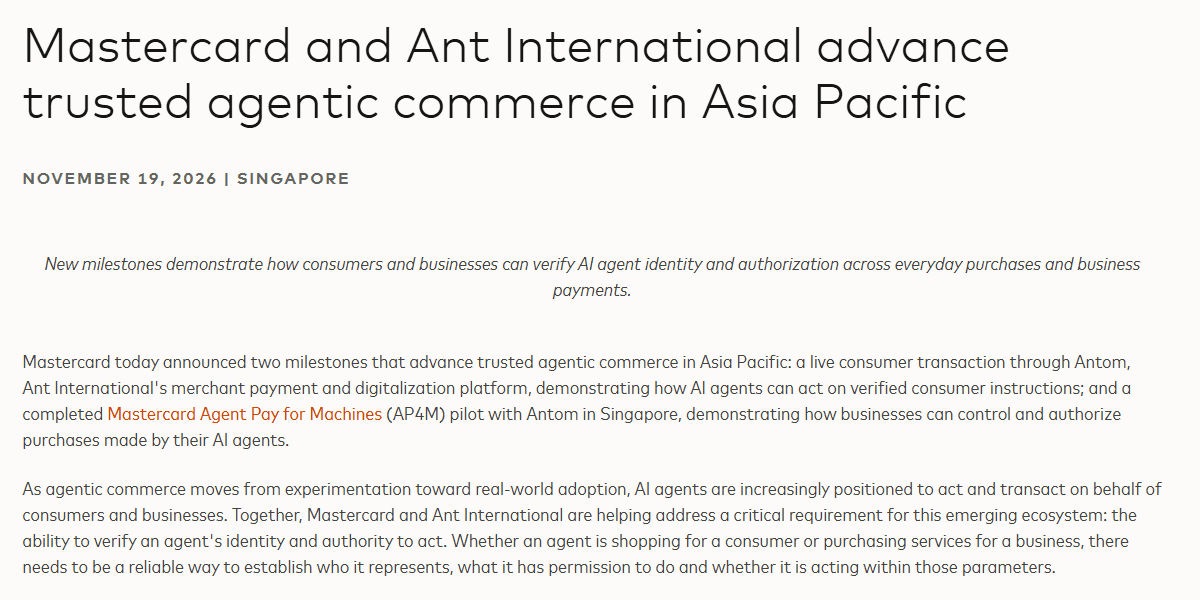
On 19 November, Mastercard announced two results with Antom, Ant International's merchant payments service. In a live consumer transaction, an AI agent bought a cup of coffee based on intent the consumer had captured beforehand. It ran on Mastercard Agent Pay with Verifiable Intent, which creates a record of what the consumer authorised the agent to do. Separately, a pilot of Agent Pay for Machines in Singapore tested how a business credentials its agents, defines what they may buy and spend, and has those limits enforced at the point of payment. Mastercard says every transaction leaves an auditable record and merchants can see which business an agent represents.
The same week, Visa expanded its Agentic Ready programme to merchants, acquirers and payment providers, with more than 140 initial participants testing how agent-initiated transactions are recognised and authenticated.
The qualifications: Mastercard describes one live consumer purchase and one completed pilot. Visa's programme is a testing framework. Neither announcement gives transaction volumes, and both are the networks' own accounts.
The point for a builder: payment networks are not asking whether an agent can pay. They are asking whether the merchant can tell who sent it and what it was allowed to do. If your agent pays with a card or key that looks exactly like its owner's, it has nothing to show.
On Teneo, the agent has its own identity and the user signs
The Teneo Agent SDK README describes an arrangement closer to Microsoft's than to a borrowed login. Each agent authenticates with its own Ethereum key and has an NFT-backed identity, minted for it on first run, with a permanent `agent_id`. Agents start private, and changing an agent's commands or capabilities sends it back to private until it is reviewed again.
When an agent needs the user to pay or approve something on-chain, it calls `TriggerWalletTx` to request a transaction from the user's wallet. The user's wallet signs, not the agent. Callers pay per command through x402 at a price the builder sets.
What the README does not document: a signed record of what the user asked the agent to do before that signature, comparable to Verifiable Intent, or spending policies attached to the agent's identity. Those still sit with the builder and the wallet.
So the builder advice is about keeping the two identities apart. Give the agent its own key, never the key of a wallet that holds funds, and make sure your own logs record which actions came from the agent and which from the person who signed. That is implementation advice, not a Teneo feature.
Find out whose name your agent uses
Pick one agent you run. Pull the last ten actions it took from the logs of the systems it touched: the broker, the inbox, the payment provider, the API. For each one, can you tell from the record whether the agent or a person did it?
If every line says it was you, your agent is signing in as you. Decide whether that is what you meant. If it is not, give it a credential of its own with narrower access than yours, and check that you can switch it off without locking yourself out.
A good place to start is one priced command from the Teneo SDK examples, with an agent key that holds no funds and a paying wallet that stays on your device.
Key takeaways
- -Agent economy
- -Agent identity
- -Agentic payments
- -MCP