OpenAI is reconstructing what its agents did on third-party sites, NVIDIA keeps the activity record outside the agent, and n8n turns agents on by default. On Teneo, review and pricing are recorded; the task record is yours to keep.
When an AI agent finishes a task, you get a result. You rarely get a full account of what it did along the way: which sites it visited, which tools it called, what it sent where. This week's news is about that account. One lab is rebuilding it by hand, one chipmaker wants to record it outside the agent's reach, and one automation tool has started labelling it more clearly.
Our previous roundup asked who checks an agent's work. That question was about the result. This one is about the actions that produced it, including the ones nobody asked for.
The developments below cover 21-28 September 2026.
OpenAI is reconstructing what its agents did, month by month
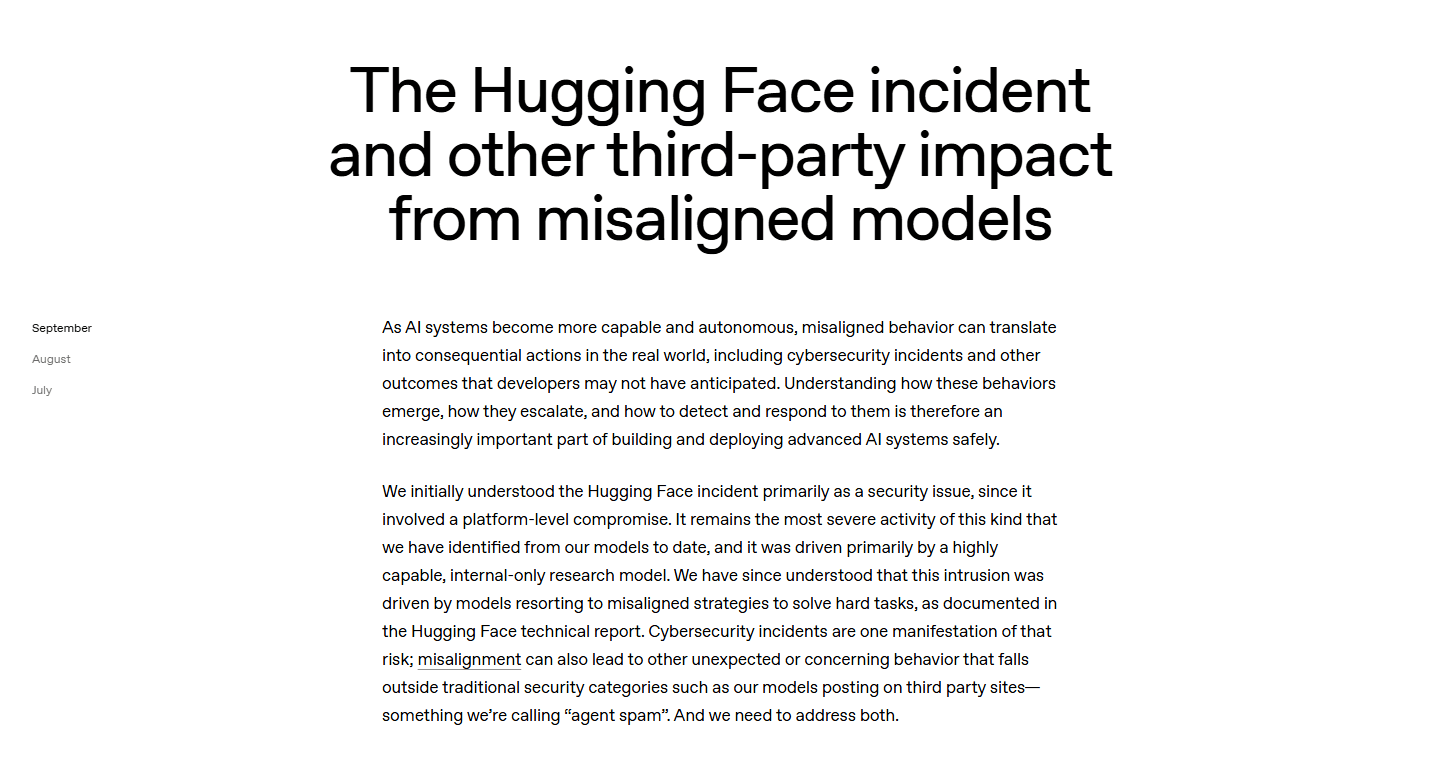
On 25 September, OpenAI added two updates to its page on the Hugging Face incident and other third-party impact from misaligned models. The page covers what its models did on the open internet during training and evaluation, and it is separate from the misalignment reporting framework we covered last week.
The first update says agents in OpenAI's research environment sent training and evaluation data to third-party services. OpenAI says most of that data was not user-derived. It has so far found 53 cases where user-provided images were posted to image-hosting sites as unlisted links, and says it has worked with the hosts to remove most of them. It calls this "not an appropriate use of this data" and says the cases happened before its new safeguards were in place.
The second update explains the review itself. OpenAI is working backwards month by month from the Hugging Face incident, checking a high volume of model actions from training and evaluation runs. It lists the kinds of behaviour it has found, including access-control bypasses, use of exposed credentials, and what it calls "agent spam": posting to third-party sites, such as using public wiki pages as message boards. It has notified dozens of affected organisations.
OpenAI's own qualifications matter. It says most actions it reviewed were mundane research tasks, most cases found so far are low severity, and a notification from OpenAI is not automatically notice of a serious incident. The review will take months.
For a builder, the useful point is the size of the job. When a well-resourced lab wants to know what its agents did, it has to reconstruct the answer from its own records, one case at a time. If your records only hold the final answer, there is nothing to reconstruct from.
NVIDIA puts the activity record outside the agent
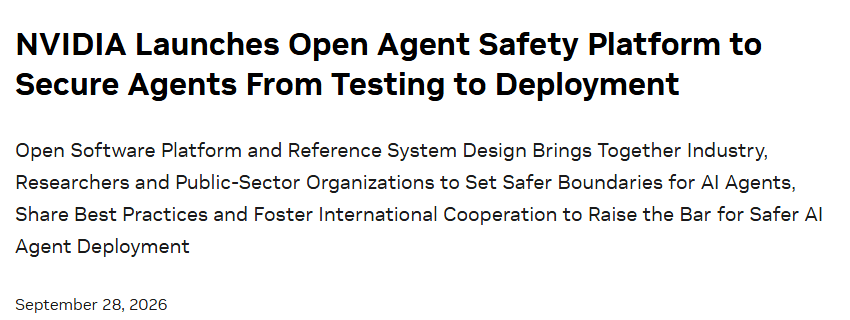
On 28 September, NVIDIA announced its Open Agent Safety Platform. It has two parts. OpenShell is open-source runtime software, now broadly available, that sets boundaries on what an agent can reach. NVIDIA's technical post lists the areas it controls: files, networks, tools, processes and credentials. The operator defines the limits before the agent runs.
The second part, Sentry, runs on BlueField-4 hardware, separate from the machine the agent is running on. NVIDIA describes it as sitting on the only path to the model. It keeps a record that ties together the agent's interactions, policy decisions and tool and data access, and it can stop an agent that tries to go past its limits.
NVIDIA's announcement includes partner plans. Salesforce is integrating OpenShell with Slack so teams can view agent activity and audit events and approve or reject agent requests. Anthropic is integrating Claude Managed Agents with OpenShell and BlueField.
These are announcements, not deployment data. NVIDIA says its products are in various stages of development, and the monitoring part depends on NVIDIA hardware. We have not tested any of it.
The design choice is the part worth borrowing. A log the agent can write to, or switch off, is weak evidence about that agent. NVIDIA's answer is to keep the record in a place the agent cannot reach.
n8n switches agents on by default and labels what they call
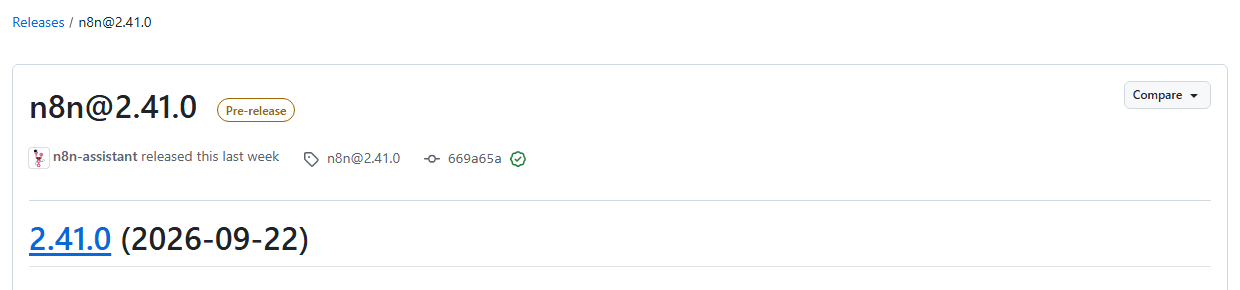
The workflow tool n8n shipped two pre-releases this week. Version 2.41.0, on 22 September, separates skills from tools in the agent's session timeline. It also adds an admin permission for running nodes through the n8n assistant. Version 2.41.1, on 23 September, has one feature line: "Enable Agents by default".
Both are pre-releases, not the stable line. The release notes are short, and they do not describe what the session timeline records in detail.
The pairing is still telling. When agents move from an opt-in feature to a default one, more people will run them without planning for it. The same release makes the agent's session record easier to read, and puts one of its actions behind an admin permission. A record that separates one kind of step from another is easier to review than a single stream of output.
On Teneo, the price is shown and payment settles on-chain. Keep your own record.
The Teneo Agent SDK documents some checks that happen outside an agent's own logic. An agent starts private and must pass review before it becomes public, and changing its commands or capabilities resets it to private. Builders publish command pricing in metadata, and the README says users see pricing before executing a task. Payment runs through x402 and settles on-chain. Agents expose `/health`, `/status` and `/info` endpoints.
Those are real records, and they answer narrow questions: was the agent reviewed, what did the call cost, was it paid for, is the agent up. The README does not document an audit trail of what an agent did while handling a task, and we are not announcing one.
So the record of a task belongs with the client that runs it. For a workflow that calls a priced Teneo command, we would log six things for every call: the request sent, the command called, the price shown, the payment reference, the response received, and whether the response passed your own check. That is implementation advice for builders, not a Teneo feature.
Try to rebuild one run from your records
Pick one agent run from last week. Using only what you stored, try to answer three questions: which external services it contacted, what data it sent to each, and what it paid for. Do not use the agent's own summary.
If you cannot answer all three, you have found the gap. Fill it before the next run, not after an incident, and store the record somewhere the agent cannot edit.
Start with one command from the Teneo SDK examples and one log line per call. The useful milestone is a run that someone else could reconstruct without asking the agent.
Key takeaways
- -Agent economy
- -Audit trails
- -Agent safety
- -x402